Overhead Lunges: Form, Muscles and Progressions
Overhead Lunges is a advanced full body exercise for single-leg strength through the hips and knees. The source muscle map identifies Rectus Femoris, Vastus Lateralis, Vastus Medialis, Gluteus Maximus, Deltoid Anterior Head, Deltoid Head as the primary targets. The source record classifies this as a compound movement using a unilateral pattern.
Video demonstration
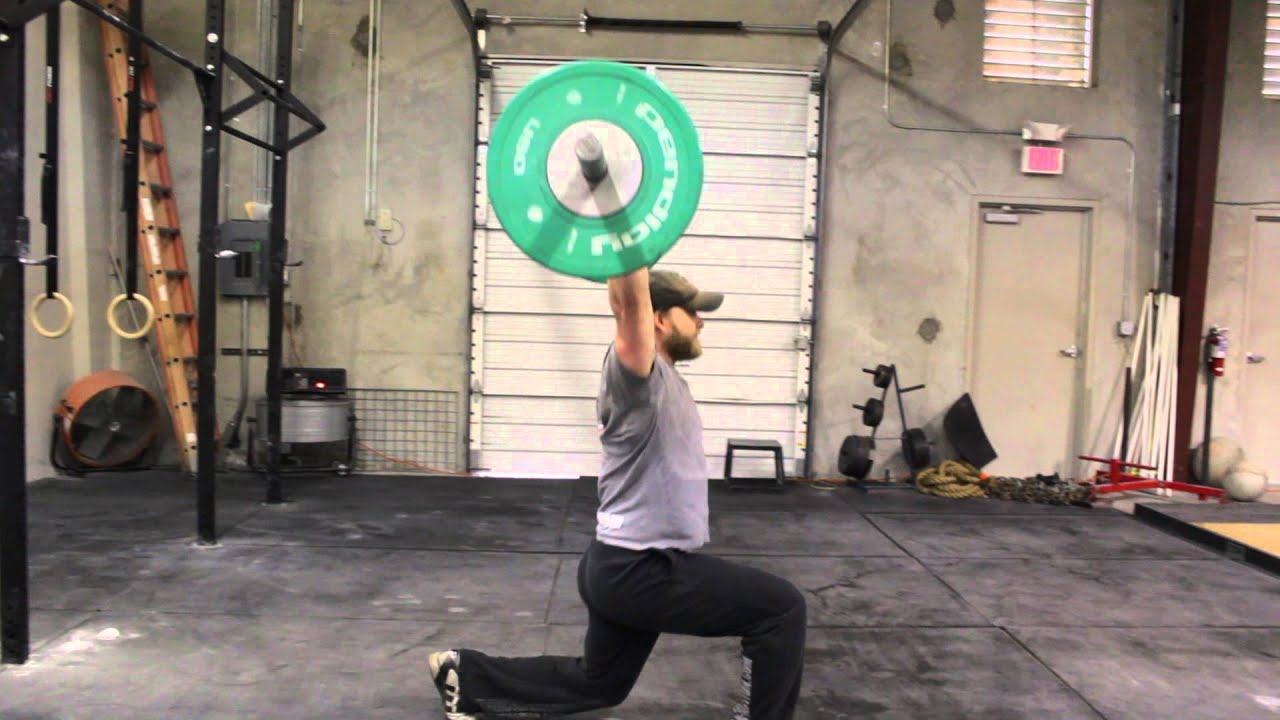
Use the video to check the movement path, then follow the written setup and cues below.
How to perform Overhead Lunges
- 1
Set up
Hold dumbbells overhead with arms fully extended, stand with feet hip-width apart and core engaged.
- 2
Create a stable start
Choose a stance long enough for both legs to bend comfortably and keep the whole front foot planted.
- 3
Perform the movement
Maintain overhead position while stepping forward into a lunge. Lower until both knees reach 90 degrees, then push through front heel to return to start.
- 4
Finish with control
Drive through the front foot to return without pushing off aggressively from the back leg.
Common mistakes
- Using a stance that is too narrow
- Letting the front knee collapse inward
- Losing pressure through the front heel
- Rushing the bottom range
Coaching cues
- Railroad-track stance
- Front foot heavy
- Knee follows toes
- Drop straight down
Easier variations
- Supported split squat
- Short-range stationary lunge
- Bodyweight reverse lunge
Harder variations
- Loaded split squat
- Deficit lunge
- Rear-foot-elevated split squat
Sets, reps and workout placement
Strength
Use 3-5 sets of controlled, challenging work and stop before technique changes.
Muscle and work capacity
Use 2-4 sets in a repeatable range, adding reps before adding load or difficulty.
Skill and control
Practice low-fatigue sets early in the session with full rest between attempts.
Place this movement after the general warm-up. Skill-heavy versions belong near the start of the workout; loaded strength work should come before high-fatigue accessory work.
Frequently asked questions
What muscles does Overhead Lunges work?
Overhead Lunges primarily uses Rectus Femoris, Vastus Lateralis, Vastus Medialis, Gluteus Maximus, Deltoid Anterior Head, Deltoid Head. Secondary support comes from Biceps Femoris, Semitendinosus, Gluteus Medius, Triceps Brachii Lateral Long, Triceps Brachii Medial.
How should I progress Overhead Lunges?
First meet the same range and body position on every repetition. Then add one repetition, a longer hold, less assistance, or a small amount of load rather than changing several variables at once.
When should I stop a set of Overhead Lunges?
Stop when the key positions can no longer be maintained. Sharp pain, numbness, or a sudden loss of control is a reason to stop and reassess rather than push through.
Related exercises
Selected by muscle overlap, movement pattern, mechanics, and difficulty.
- Deficit Lunges
Intermediate · Lower Body
- Stationary Lunges
Beginner · Lower Body
- Barbell Squat
Intermediate · Compound
- Squat
Beginner · Compound
- Handstand Shoulder Tap
Advanced · Calisthenics
- Handstand Pike Press
Expert · Calisthenics
- Handstand Tuck Press
Expert · Calisthenics
- Tuck Handstand
Intermediate · Calisthenics