Handstand Kick-up: Form, Muscles and Progressions
Handstand Kick-up is a intermediate calisthenics exercise for overhead balance, shoulder strength, and body-line control. The source muscle map identifies Deltoid Anterior Head, Deltoid Head, Triceps Brachii Lateral Long, Triceps Brachii Medial as the primary targets. The source record classifies this as a compound movement using a dynamic entry pattern.
Video demonstration
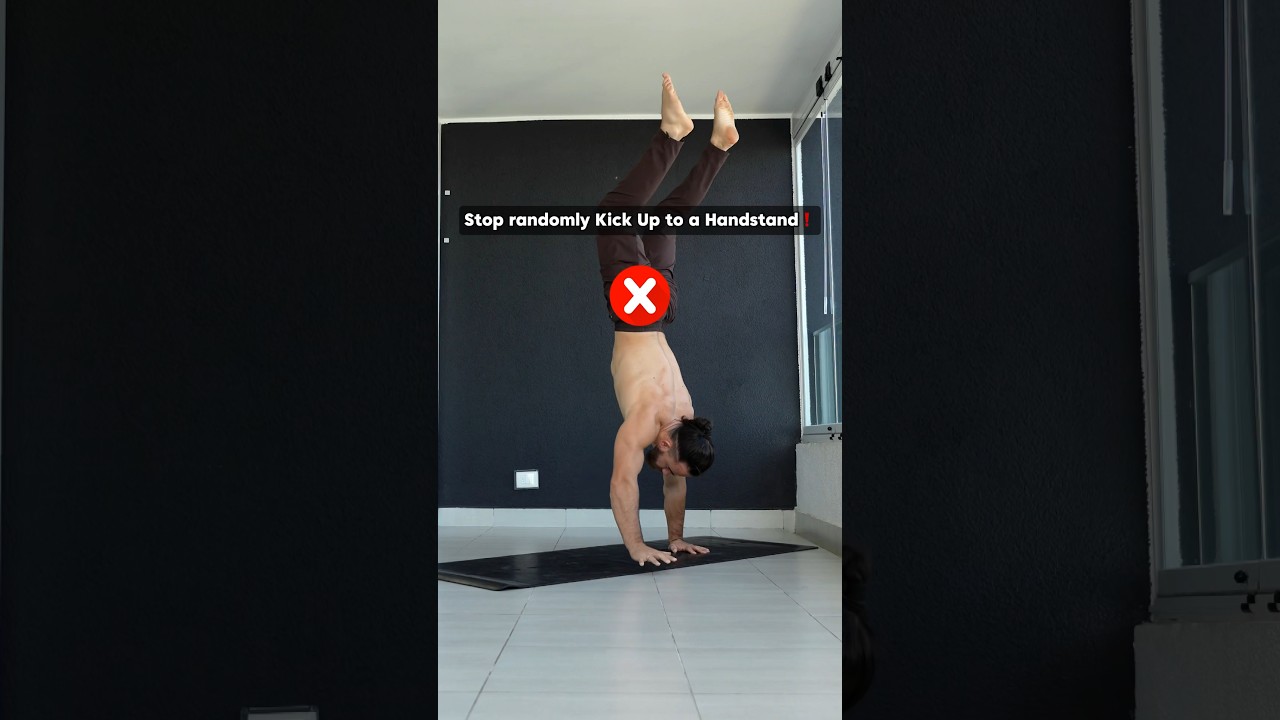
Use the video to check the movement path, then follow the written setup and cues below.
How to perform Handstand Kick-up
- 1
Set up
Start in a forward fold position with hands on ground, shoulder-width apart
- 2
Create a stable start
Spread the fingers, grip the floor, lock the elbows, and elevate the shoulders before shifting weight over the hands.
- 3
Perform the movement
Kick one leg up while pushing through hands, follow with second leg to achieve handstand position
- 4
Finish with control
Return to a stable stacked position or step down deliberately before shoulder position is lost.
Common mistakes
- Collapsing through the shoulders
- Overarching the lower back
- Looking too far forward
- Moving the legs before balance is established
Coaching cues
- Push tall
- Grip with fingertips
- Ribs in
- Move from a stable stack
Easier variations
- Wall-facing handstand
- Box pike hold
- Weight shifts on parallettes or floor
Harder variations
- Freestanding handstand
- Controlled tuck or pike changes
- Shoulder taps
- Press-to-handstand work
Sets, reps and workout placement
Strength
Use 3-5 sets of controlled, challenging work and stop before technique changes.
Muscle and work capacity
Use 2-4 sets in a repeatable range, adding reps before adding load or difficulty.
Skill and control
Practice low-fatigue sets early in the session with full rest between attempts.
Place this movement after the general warm-up. Skill-heavy versions belong near the start of the workout; loaded strength work should come before high-fatigue accessory work.
Frequently asked questions
What muscles does Handstand Kick-up work?
Handstand Kick-up primarily uses Deltoid Anterior Head, Deltoid Head, Triceps Brachii Lateral Long, Triceps Brachii Medial. Secondary support comes from Pectoralis Major, Serratus Anterior, Rectus Abdominis, Rectus Femoris.
How should I progress Handstand Kick-up?
First meet the same range and body position on every repetition. Then add one repetition, a longer hold, less assistance, or a small amount of load rather than changing several variables at once.
When should I stop a set of Handstand Kick-up?
Stop when the key positions can no longer be maintained. Sharp pain, numbness, or a sudden loss of control is a reason to stop and reassess rather than push through.
Related exercises
Selected by muscle overlap, movement pattern, mechanics, and difficulty.
- Handstand Pike Press
Expert · Calisthenics
- Handstand Shoulder Tap
Advanced · Calisthenics
- Handstand Tuck Press
Expert · Calisthenics
- Tuck Handstand
Intermediate · Calisthenics
- Advanced Tuck Planche
Advanced · Calisthenics
- Planche Hold
Expert · Calisthenics
- Single Leg Planche
Advanced · Calisthenics
- Archer Push-up
Advanced · Bodyweight