Handstand Leg Raise: Form, Muscles and Progressions
Handstand Leg Raise is a advanced calisthenics exercise for overhead balance, shoulder strength, and body-line control. The source muscle map identifies Rectus Abdominis, Rectus Femoris as the primary targets. Move the legs without changing the stacked hand, shoulder, rib, and pelvis position.
Video demonstration
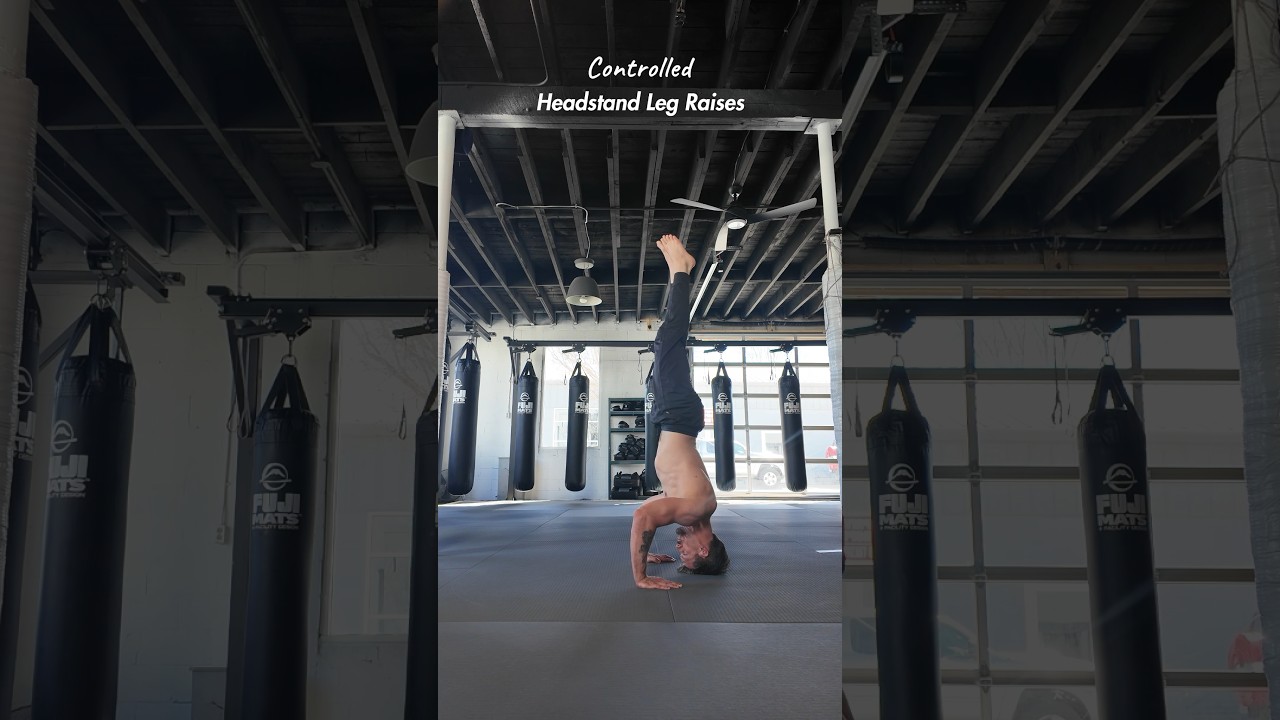
Use the video to check the movement path, then follow the written setup and cues below.
How to perform Handstand Leg Raise
- 1
Set up
Start in a stable handstand position with legs straight and together
- 2
Create a stable start
Spread the fingers, grip the floor, lock the elbows, and elevate the shoulders before shifting weight over the hands.
- 3
Perform the movement
While maintaining handstand, flex hips to bring knees toward chest, then extend back to starting position
- 4
Finish with control
Return to a stable stacked position or step down deliberately before shoulder position is lost.
Common mistakes
- Collapsing through the shoulders
- Overarching the lower back
- Looking too far forward
- Moving the legs before balance is established
Coaching cues
- Push tall
- Grip with fingertips
- Ribs in
- Move from a stable stack
Easier variations
- Wall-facing handstand
- Box pike hold
- Weight shifts on parallettes or floor
Harder variations
- Freestanding handstand
- Controlled tuck or pike changes
- Shoulder taps
- Press-to-handstand work
Sets, reps and workout placement
Strength
Use 3-5 sets of controlled, challenging work and stop before technique changes.
Muscle and work capacity
Use 2-4 sets in a repeatable range, adding reps before adding load or difficulty.
Skill and control
Practice low-fatigue sets early in the session with full rest between attempts.
Place this movement after the general warm-up. Skill-heavy versions belong near the start of the workout; loaded strength work should come before high-fatigue accessory work.
Frequently asked questions
What muscles does Handstand Leg Raise work?
Handstand Leg Raise primarily uses Rectus Abdominis, Rectus Femoris. Secondary support comes from Deltoid Anterior Head, Deltoid Head, Triceps Brachii Lateral Long, Triceps Brachii Medial.
How should I progress Handstand Leg Raise?
First meet the same range and body position on every repetition. Then add one repetition, a longer hold, less assistance, or a small amount of load rather than changing several variables at once.
When should I stop a set of Handstand Leg Raise?
Stop when the key positions can no longer be maintained. Sharp pain, numbness, or a sudden loss of control is a reason to stop and reassess rather than push through.
Related exercises
Selected by muscle overlap, movement pattern, mechanics, and difficulty.
- Handstand Shoulder Tap
Advanced · Calisthenics
- Handstand Pike Press
Expert · Calisthenics
- Handstand Tuck Press
Expert · Calisthenics
- Advanced Tuck Planche
Advanced · Calisthenics
- Single Leg Planche
Advanced · Calisthenics
- Tuck Handstand
Intermediate · Calisthenics
- Archer Push-up
Advanced · Bodyweight
- Planche Hold
Expert · Calisthenics