Weighted Front Lever: Form, Muscles and Progressions
Weighted Front Lever is a expert calisthenics exercise for straight-arm pulling strength and whole-body tension. The source muscle map identifies Latissimus Dorsi, Rectus Abdominis, Deltoid Posterior Head as the primary targets. Treat added load as a late-stage progression: establish a repeatable full front lever first, then use the smallest secure load that preserves the same shoulder, hip, and elbow positions.
Video demonstration
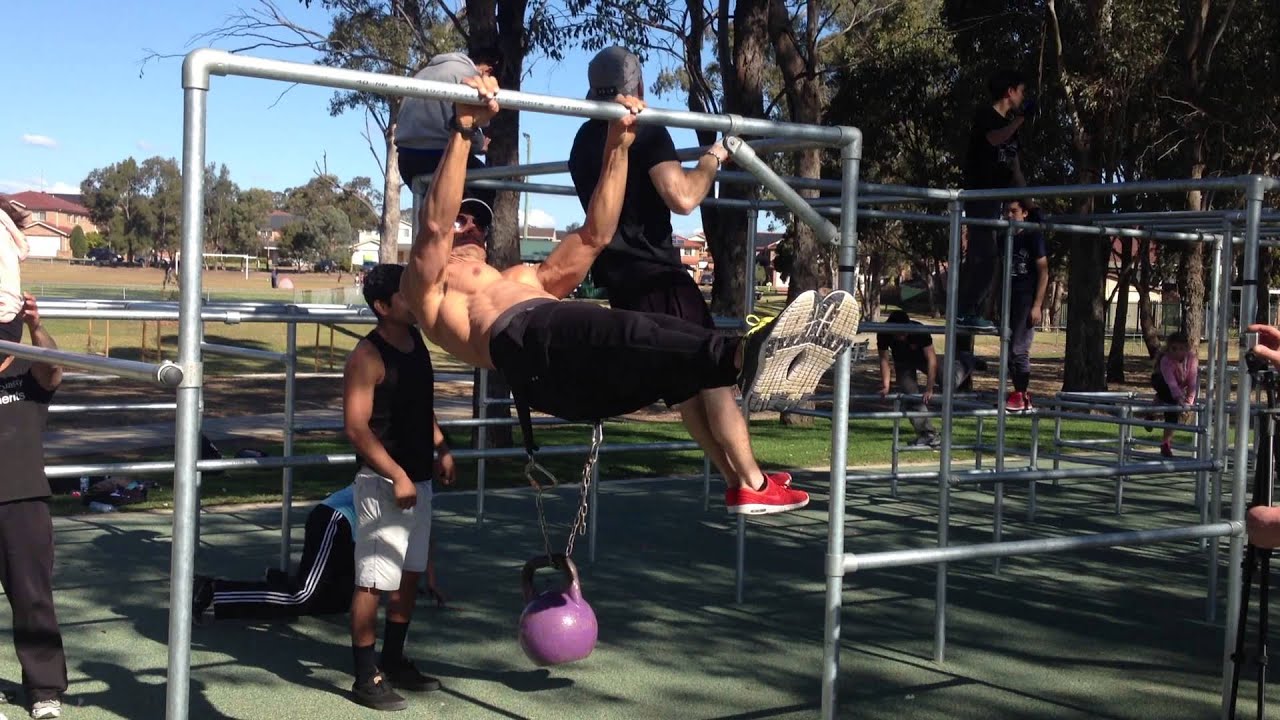
Use the video to check the movement path, then follow the written setup and cues below.
How to perform Weighted Front Lever
- 1
Set up
Secure weight vest or ankle weights. Hang from pull-up bar with overhand grip. Ensure weight is properly distributed.
- 2
Create a stable start
Use an overhand grip, depress the shoulder blades, and establish a hollow trunk before extending the hips.
- 3
Perform the movement
From hanging position, raise weighted body to horizontal position. Maintain front lever form despite added resistance.
- 4
Finish with control
Hold only while the hips remain level with the shoulders, then return with control rather than dropping.
Common mistakes
- Bending the elbows
- Letting the hips sag
- Losing the hollow trunk position
- Choosing a progression that cannot be held cleanly
Coaching cues
- Push the bar toward your hips
- Lock the elbows
- Squeeze glutes
- Shorten the lever before form breaks
Easier variations
- Tuck front lever
- Band-assisted tuck hold
- Front-lever row in a short lever
Harder variations
- Advanced tuck front lever
- Half-lay front lever
- Straddle front lever
- Full front lever
Sets, reps and workout placement
Strength
Use 3-5 sets of controlled, challenging work and stop before technique changes.
Muscle and work capacity
Use 2-4 sets in a repeatable range, adding reps before adding load or difficulty.
Skill and control
Practice low-fatigue sets early in the session with full rest between attempts.
Place this movement after the general warm-up. Skill-heavy versions belong near the start of the workout; loaded strength work should come before high-fatigue accessory work.
Prerequisites
- A full front lever held with locked elbows and level hips across repeated sets
- Pain-free active hanging and straight-arm scapular depression
- A controlled exit from the lever without dropping from the bar
Equipment and setup
- Use a secure pull-up bar with enough clearance for the body and added load.
- Prefer a close-fitting weighted vest. If ankle weights are used, fasten them symmetrically and confirm that they cannot slide.
- Do not hold a loose dumbbell or plate between the feet during an isometric lever.
Progression and loading standard
Add external load only after five sets of 8-12 seconds meet the same body-line standard in two sessions. Begin with the smallest practical increment, return to shorter holds, and increase time before load.
Keep most weighted holds at a submaximal duration that leaves a controlled exit available. If the hips fall, elbows bend, or shoulder depression is lost earlier than expected, remove the load instead of accepting a different position.
Safety considerations
Added load increases the consequence of grip loss and raises straight-arm stress at the shoulder and elbow. Use clear floor space, inspect the bar and loading equipment, and stop for sharp pain, numbness, or an uncontrolled change in joint position.
Frequently asked questions
What muscles does Weighted Front Lever work?
Weighted Front Lever primarily uses Latissimus Dorsi, Rectus Abdominis, Deltoid Posterior Head. Secondary support comes from Biceps Brachii Long Head, Biceps Brachii Short Head, Serratus Anterior, Obliques.
How should I progress Weighted Front Lever?
First meet the same range and body position on every repetition. Then add one repetition, a longer hold, less assistance, or a small amount of load rather than changing several variables at once.
When should I stop a set of Weighted Front Lever?
Stop when the key positions can no longer be maintained. Sharp pain, numbness, or a sudden loss of control is a reason to stop and reassess rather than push through.
Related exercises
Selected by muscle overlap, movement pattern, mechanics, and difficulty.
- Half Lay Front Lever
Expert · Calisthenics
- Front Lever with Bands
Intermediate · Calisthenics
- Butterfly Pull-up
Advanced · Pull
- Assisted Pull-up
Beginner · Pull
- Band-Assisted Pull-up
Beginner · Pull
- Pull-up
Intermediate · Pull
- Handstand Leg Raise
Advanced · Calisthenics
- Banded Sit-up
Beginner to Intermediate · Core